The Complete Matcha Set Guide
 Vytautas Butkus · Japanese culture & matcha expert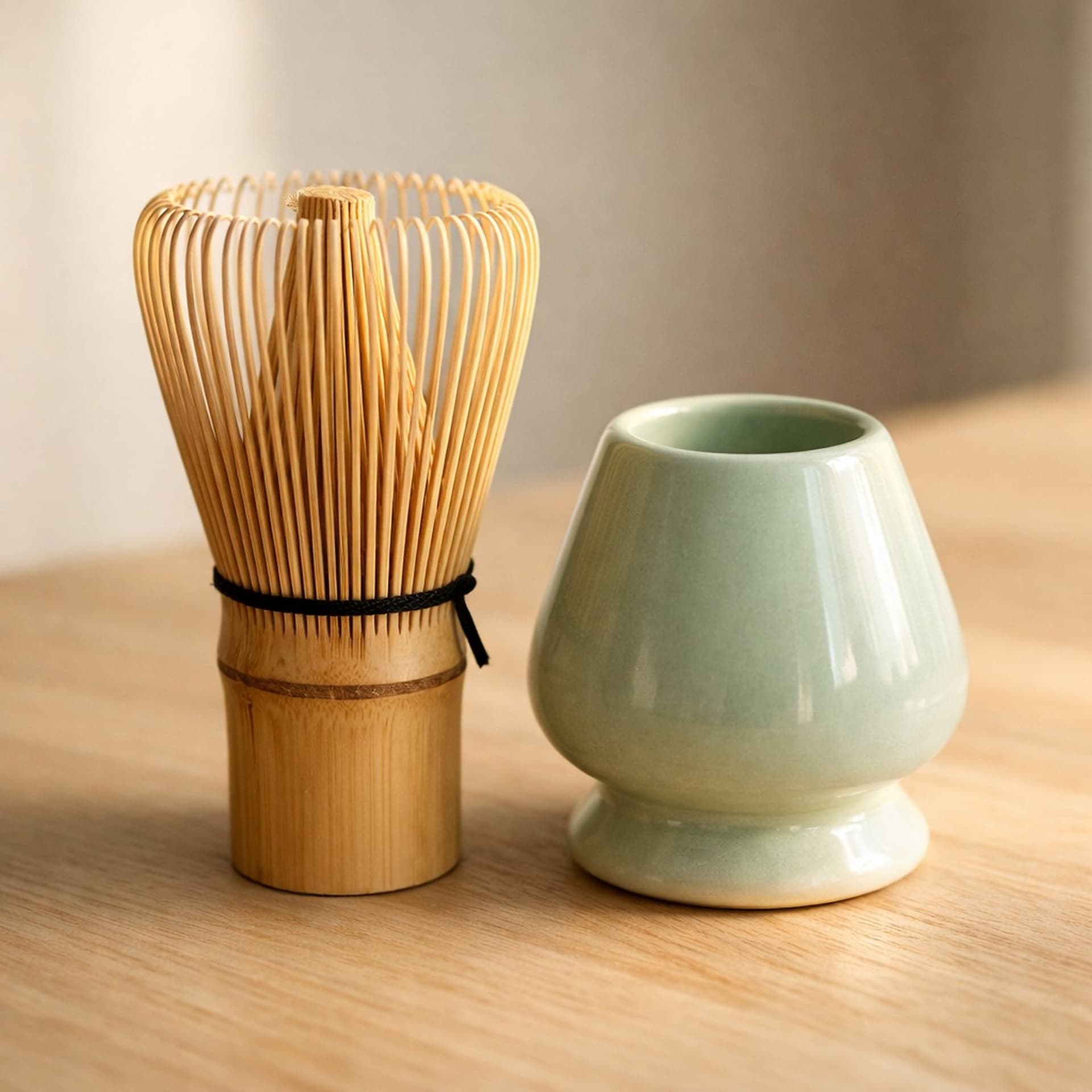
If I were starting again today, I would not buy every matcha accessory. I would buy good matcha, an 80-prong bamboo whisk, a small sieve, and a wide bowl I can actually move my wrist in. The rest can wait.
A matcha set should make the drink smoother, not make your kitchen look like a souvenir shelf. I source tea from Uji and Nishio, but at home in the Netherlands I still use a very ordinary scale and a bowl with enough width. Tools matter when they solve a real problem.
Jump to:
What I would buy in three budgets
Budget 1: minimum that works
- Essential: good matcha powder
- Essential: small fine-mesh sieve
- Essential: wide cereal bowl or soup bowl
- Tool: small electric frother if you refuse to buy a whisk yet
This is not traditional, but it gets you drinking matcha without pretending a spoon will dissolve powder properly.
Budget 2: what I recommend for beginners
- Essential: matcha powder
- Essential: 80-prong chasen, a bamboo whisk
- Essential: sieve
- Nice-to-have: chashaku, the bamboo scoop
- Nice-to-have: wide chawan, the matcha bowl
This is the point where matcha becomes consistent. You can foam properly and stop fighting clumps.
Budget 3: the set I would keep long term
- Essential: fresh matcha in a sealed tin
- Essential: 80- or 100-prong chasen
- Essential: sieve
- Nice-to-have: chawan you enjoy holding
- Nice-to-have: whisk holder (kuse naoshi)
- Nice-to-have: 0.1 g scale
The scale sounds unromantic. It is also the fastest way to stop making weak matcha one day and bitter matcha the next.
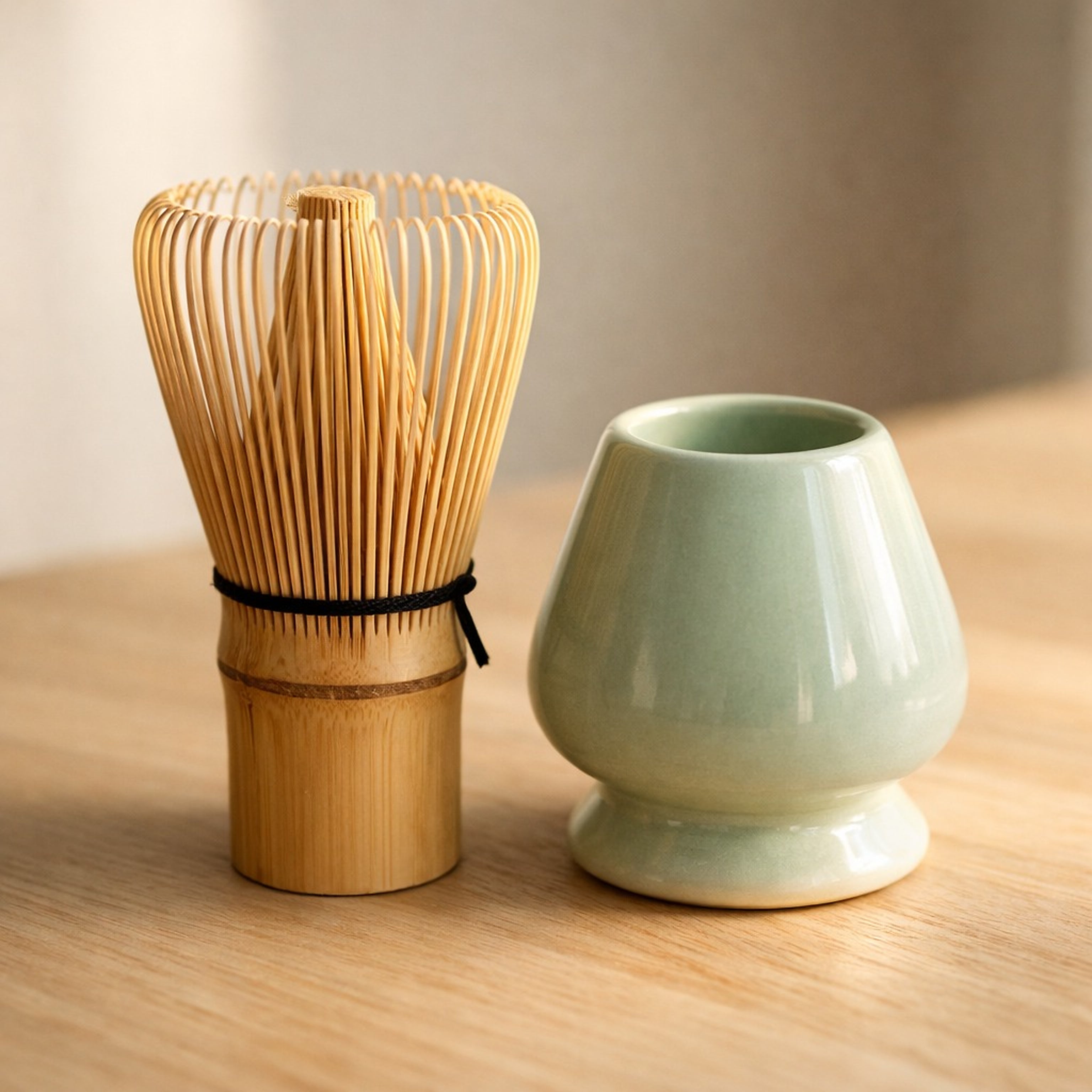
Essential, nice-to-have, skip
Matcha powder: essential
Obvious, but it is where people under-spend after buying nice tools. For water, use ceremonial or premium matcha. For baking, use culinary. If the powder is stale, a beautiful bowl will not rescue it.
Sieve: essential
Matcha clumps because the powder is fine and slightly static. A small tea strainer solves more problems than most expensive accessories.
Chasen: essential if you drink matcha often
A chasen aerates and disperses powder better than a spoon. It also teaches you the texture of a proper cup. If you drink matcha weekly, buy one.
Chashaku: nice-to-have
A chashaku is a bamboo scoop. It is beautiful and traditional, but not precise. I still prefer grams: 1.5 g for usucha, 2 g for latte. Use the scoop if you enjoy the ritual; use a scale if you want repeatability.
Chawan: nice-to-have
A chawan is a matcha bowl. The shape matters more than the name. You want a wide base, enough depth to avoid splashing, and room for a fast W motion.
Whisk holder: nice-to-have
A kuse naoshi helps the whisk dry in shape. Useful, especially in damp kitchens. Not essential on day one.
Special matcha spoon, tray, towel set: skip at first
Buy them later if the ritual gives you pleasure. They do not fix clumps, bitter water, or stale powder.
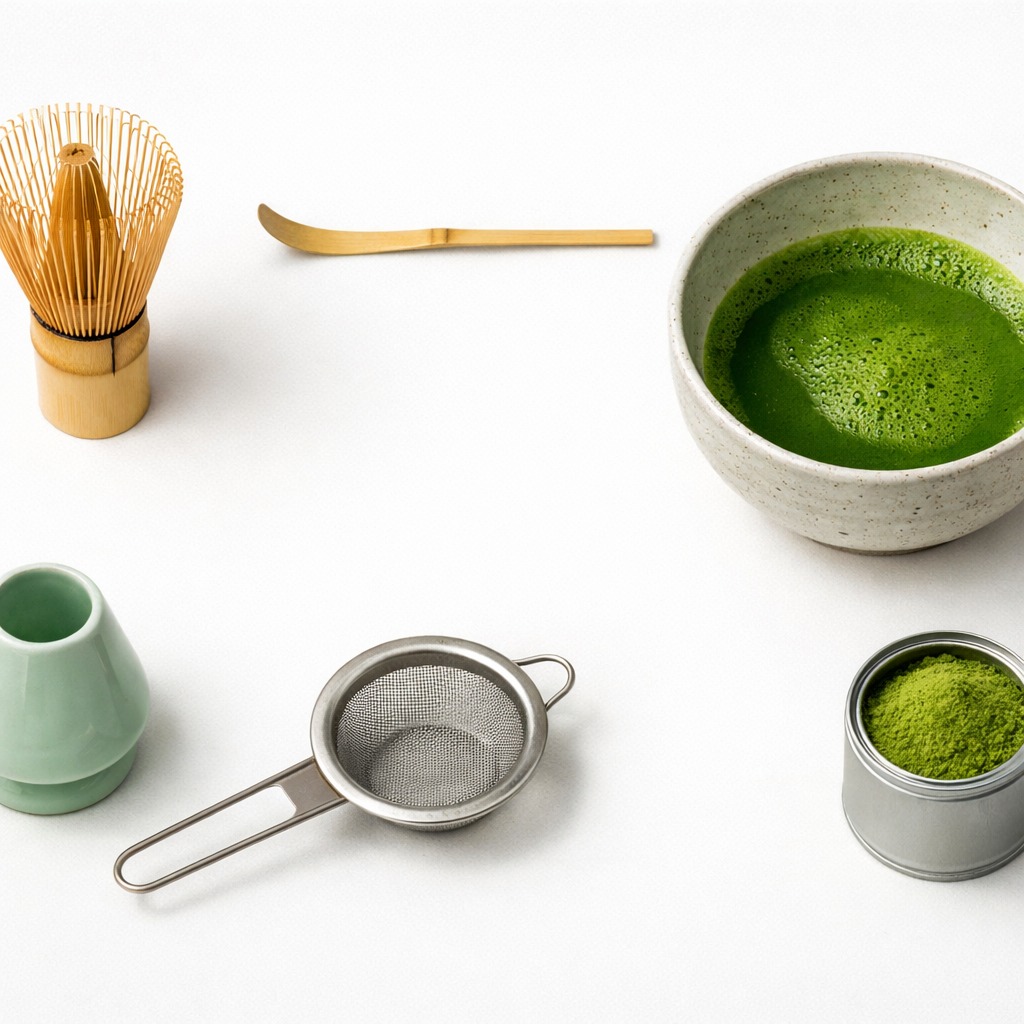
Chasen: 80-prong vs 100-prong
An 80-prong whisk is the best beginner buy. It is flexible enough for foam, sturdy enough for daily use, and usually less fragile than very fine whisks. A 100-prong whisk can make a slightly finer foam, but the difference is smaller than people expect if your matcha is sifted and your water ratio is right.
I would rather have a good 80-prong whisk and fresh matcha than an expensive 100-prong whisk with dull powder. Soak the whisk briefly in warm water before use. Rinse after use. No soap. Let it dry fully.
Chawan vs a wide bowl
You do not need a formal chawan to start. You need width. A narrow mug forces circular stirring, which leaves clumps. A wide cereal bowl works surprisingly well if the bottom is not too flat and the sides are high enough.
If you buy a chawan, choose one you can hold comfortably. Some look beautiful and feel awkward. I prefer bowls around 11-13 cm wide for daily usucha.
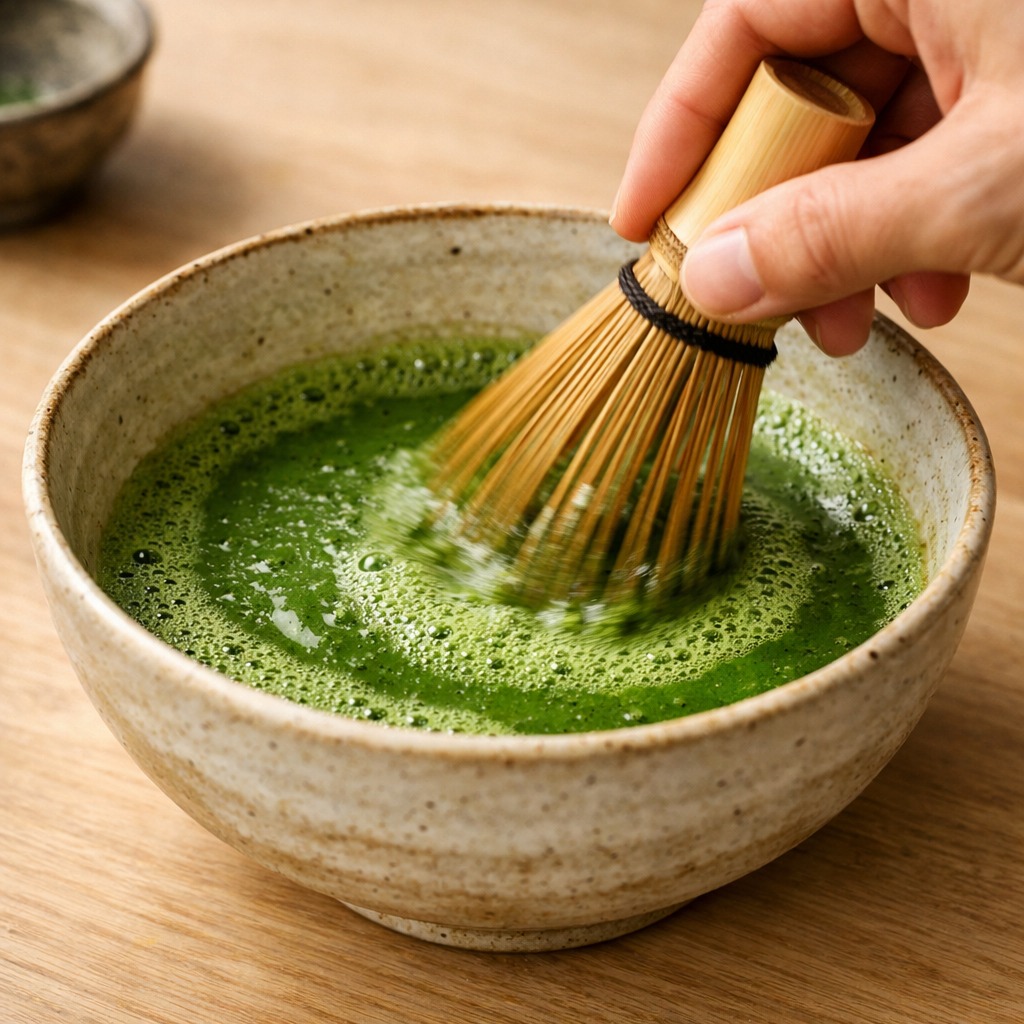
Storage and care
Matcha storage tin
Essential once the bag is open. Oxygen, light, heat, and moisture flatten matcha quickly. Keep the powder sealed, cool, and dry. I use opened tins within 4-6 weeks when possible.
Whisk care
Rinse with warm water, shake gently, and dry upright or on a holder. If the tines curl inward over time, that is normal. If it smells damp, it was stored too wet.
Water temperature
A temperature-control kettle is nice, but not required. Boil water, wait a few minutes, and aim for about 75-80 °C. Boiling water makes many matchas taste harsher.
The set only works if the method is right
Use 1.5-2 g matcha, sift it, add 60-70 ml water, and whisk fast in a W motion for 15-25 seconds. For a full walkthrough, read how to make matcha. If you make milk drinks, read how to make a matcha latte.
Frequently Asked Questions
What is the minimum I need to make matcha?
Matcha, hot water, a sieve, and a way to mix. A bamboo whisk is the best tool if you plan to drink matcha regularly.
Can I use a regular whisk instead of a bamboo one?
A regular kitchen whisk is usually too large and stiff. A small electric frother works better than a big whisk, but a chasen gives the best traditional texture.
How long does a bamboo matcha whisk last?
With regular use and proper drying, several months is normal. Replace it when broken tines or stiffness make whisking difficult.
Do I need a special bowl for matcha?
No. A wide bowl works. A chawan is nicer, but width matters more than the label.
What's the difference between a matcha set and a matcha kit?
Brands use the terms loosely. I look at the contents: matcha, whisk, bowl, scoop, sieve, and storage.
Where the Popcha kit fits
The Popcha Traditional Matcha Kit is for the Budget 2 buyer: someone who wants the core tools without piecing them together. If you already own a bowl and whisk, just buy matcha powder and spend the rest on freshness.
Written by Vytautas Butkus.
Frequently asked
- What is the minimum I need to make matcha?
- You need matcha, hot water, and a way to mix it. A bamboo whisk is the simplest tool for getting a smooth cup, but you can start with a small milk frother or vigorous whisking if you are careful.
- Can I use a regular whisk instead of a bamboo one?
- You can, but it is usually harder to break up clumps with a regular kitchen whisk because the wires are thicker and the shape is different. If you want the smoothest result, a bamboo whisk tends to work better for matcha.
- How long does a bamboo matcha whisk last?
- It depends on how often you use it and how you dry it, but many people get months of regular use. Rinsing after each use and air drying fully helps it last longer.
- Do I need a special bowl for matcha?
- No. A wide bowl makes whisking easier, but any wide bowl you already have will work. The main thing is enough space to whisk briskly without splashing.
- What’s the difference between a matcha set and a matcha kit?
- People use the terms loosely. In practice, a “kit” often includes matcha plus the core tools, while a “set” can mean just the tools, but it varies by brand. Check the product contents rather than the label.