Japanese Matcha: Regions, Grades and What Makes It Special
 Vytautas Butkus · Japanese culture & matcha expert
The most useful question is not "is this Japanese matcha?" It is: which region, which cultivar, which harvest, and who ground it? In Japan those details are normal. In Europe they are still treated like extra marketing.
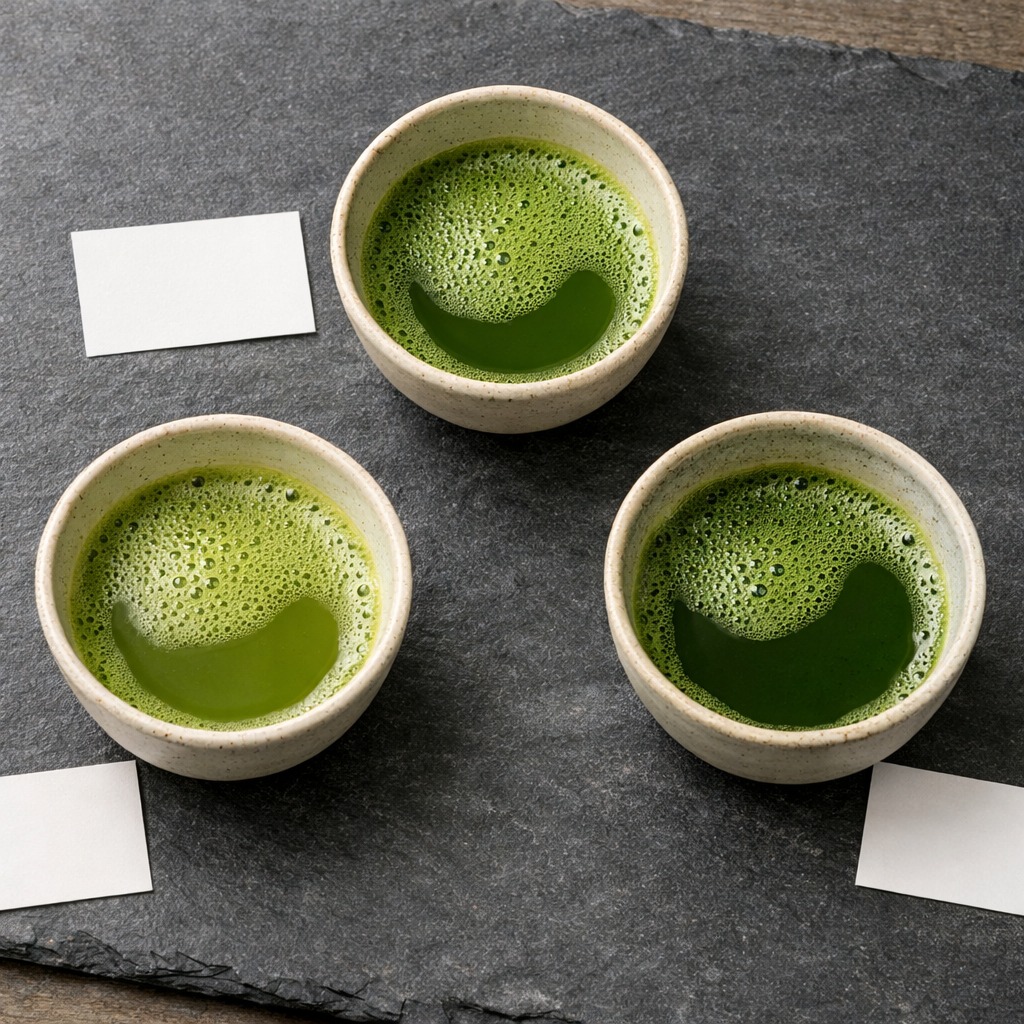
The first time I tasted tencha beside finished matcha in Uji, the producer put four small cups in front of me and refused to name them until I had guessed. One was Samidori from Kyoto: soft, almost steamed rice. One was Okumidori from Aichi: greener, firmer, easier to foam. I got one wrong. That was useful. Region matters, but not in the lazy way labels suggest.
Jump to:
What makes Japanese matcha different?
Proper matcha is ground tencha, the shaded leaf processed without rolling. The leaf is covered before harvest, steamed, dried, sorted, and stone-ground or machine-ground into powder. That chain matters. Powdered sencha is green tea powder; it is not the same thing.
Japan's best producers are obsessive about shading, sorting, and grinding temperature. Stone mills can be slow, often around 30-40 g per hour depending on the mill and desired fineness. Go too fast and heat damages aroma. This is one reason good matcha costs more than ordinary green tea powder.
Japanese matcha regions compared
These are broad patterns, not laws. A great farmer in a less famous area can beat a careless Uji label. Still, the regions have personalities.
Uji, Kyoto
Uji is the prestige name. The best Uji matcha tends to be umami-forward, soft, and aromatic, especially from areas around Uji, Wazuka, Ujitawara, and nearby Kyoto tea villages. Cultivars like Samidori, Asahi, Ujihikari, and Okumidori appear often in serious tins.
Typical attribute: elegant umami and soft bitterness. Price band: usually the highest, especially for first-harvest and single-cultivar lots.
Nishio, Aichi
Nishio is a serious matcha region, not a cheaper imitation of Kyoto. The local identity is tied to tencha processing and stone grinding in the region. I often find Nishio matcha slightly firmer and more direct than Uji, with good colour and dependable foam.
Typical attribute: vivid green, practical strength, good value in premium grades. Price band: mid to high, often better value than comparable Kyoto prestige tins.
Yame, Fukuoka
Yame is famous for high-grade shaded teas, especially gyokuro, and some matcha from the area carries that deep sweetness. It can be plush. Sometimes too plush for people who prefer a dry finish.
Typical attribute: round sweetness and deep umami. Price band: high for top lots, with smaller availability in Europe.
Kagoshima
Kagoshima is large, modern, and increasingly important for organic and export matcha. The climate supports scale. You often see cultivars like Saemidori, Okumidori, Yutakamidori, and newer tea cultivars from Kyushu. The best lots are bright and clean; the weaker ones can feel more industrial.
Typical attribute: strong colour, clean profile, more organic options. Price band: broad, from affordable culinary to serious premium.
Cultivars I pay attention to
Samidori
Classic Kyoto feel: soft, balanced, often elegant in usucha. When it is good, it has a quiet sweetness that does not need milk.
Okumidori
Reliable colour and structure. I like Okumidori for customers who want a vivid cup without too much sharpness. It also behaves well in lattes.
Asahi
Often used in higher-end tencha and koicha-style matcha. Low yields and a short picking window can make it expensive. When it is right, the umami is concentrated without being heavy.
Saemidori
Bright colour, sweet profile, common in Kyushu. It can be beautiful, but in matcha it depends heavily on shading and processing.
Grades: ceremonial, premium, culinary
"Ceremonial grade" is useful in Europe, but it is not the tidy Japanese classification people imagine. In Japan, producers talk more about harvest, cultivar, blend, intended use, and quality tier. A tea suitable for koicha, thick tea used in tea ceremony, is different from a pleasant everyday usucha.
- Ceremonial: best for water, usucha, and tasting the tea directly.
- Premium: good for lattes and daily drinking, often the best value.
- Culinary: stronger, more bitter, appropriate for baking, ice cream, and sweets.
For the full grade discussion, read ceremonial grade matcha.
What "Japanese matcha" often means in the EU
Here is the honest part. In Europe, a bag can look Japanese without telling you much. Some products are blended from multiple Japanese regions. Some are packed in the EU from imported powder. Some say "Japanese style" and are not from Japan at all. "Packed in Germany" or "packed in the Netherlands" is not an origin statement.
I look for wording like "Product of Japan", a named region, a harvest or lot note, and a supplier willing to answer direct questions. A vague front label with a Kyoto temple picture is not enough. I have seen very pretty tins with stale, yellow-green powder inside.
How I judge a tin before buying again
- Colour: vivid green, not yellow olive. Colour alone is not proof, but dull colour is a warning.
- Aroma: fresh seaweed, sweet grass, steamed greens, sometimes nuts. Not hay.
- Foam: with 1.5 g and 70 ml water, it should foam without fighting you.
- Finish: bitterness is normal; harsh astringency that dries the tongue for minutes is not.
- Transparency: region and use case should be clear.
If you want origin basics, read where matcha comes from and the matcha plant from leaf to powder.
Frequently Asked Questions
What is the difference between Uji matcha and regular matcha?
Uji refers to the Kyoto tea region and its production network. Regular matcha may come from many regions and quality levels. Producer quality often matters as much as the region name.
Is Uji matcha the best?
Sometimes. Uji has extraordinary producers, but Nishio, Yame, and Kagoshima can also produce excellent matcha.
Is all matcha from Kyoto?
No. Kyoto is famous, but Japan has several matcha-producing regions.
How do I know if my matcha is really from Japan?
Look for "Product of Japan", region details, and a brand willing to explain sourcing.
Does the growing region affect matcha quality?
Yes, but it is not a guarantee. Shading, harvest, cultivar, processing, grinding, and freshness also matter.
Is matcha Japanese?
The benchmark for high-quality matcha is Japanese, especially because of tencha production and tea culture. Other countries make powdered green tea too, but not all of it is equivalent.
What I want in Popcha matcha
For Popcha, I look for the cup first: colour, aroma, foam, and finish. If you want a daily tin, start with Popcha matcha powder.
Written by Vytautas Butkus.
Frequently asked
- What is the difference between Uji matcha and regular matcha?
- Uji matcha refers to matcha associated with the Uji area near Kyoto, while “regular matcha” is a broad term that can come from many regions and grades. In practice, the bigger differences are often producer quality, freshness, and intended use.
- Is Uji matcha the best?
- Not automatically. Uji is famous, but Nishio and Kagoshima also produce excellent matcha, and quality varies a lot from brand to brand.
- Is all matcha from Kyoto?
- No. Kyoto is a famous tea area, but matcha is produced in multiple regions across Japan, and matcha is also produced outside Japan.
- How do I know if my matcha is really from Japan?
- Look for clear origin wording like “Product of Japan”, not just “packed in”. Brands that share region and sourcing details are usually more reliable.
- Does the growing region affect matcha quality?
- It can influence quality, but it is not a guarantee. Harvest timing, shading, processing, grinding, and freshness often matter as much as the region name.
- Is matcha Japanese?
- Traditionally, high-quality matcha is Japanese and strongly tied to Japanese tea culture. Matcha is now made in other countries too, but Japan remains the benchmark for many buyers.